Inverter replacement
The inverter is the hardest-working part of your solar system — it turns the DC power from your panels into the AC power your home uses. It is also, on many systems, the first major component to wear out. When it fails, your panels can be perfect and your production still drops to zero.
Signs your inverter is failing
Red light or error code
The unit is reporting a fault — ground fault, grid error, relay failure or overheating are common ones.
Production dropped to zero
Or fell off a cliff on a clear day, with no change in the weather or your usage.
It only works part of the day
Shutting down in afternoon heat often means the unit is overheating or failing — though vents, placement and grid problems can cause it too, so it takes a real check to be sure.
The app shows "inverter offline"
Sometimes that is just communications; sometimes the inverter itself has stopped. It takes a real check to know which.
String inverter or microinverters?
Older systems usually have one central string inverter (SolarEdge systems pair one with panel optimizers). Newer systems often use microinverters (such as Enphase), one per panel, so a single failure only costs you that panel's output. When a string inverter dies, replacement options include a like-for-like unit, a modern equivalent, or — on some systems — a conversion worth discussing. The installer services Enphase, SolarEdge, Tesla and Qcells equipment and will lay out the honest options for your roof, including what is still under warranty.
How replacement works
- Confirm the fault. Testing separates a dead inverter from a breaker, wiring or monitoring problem — so you do not replace the wrong part.
- Check the warranty. Many inverters and microinverters carry long manufacturer warranties. If yours applies, The installer helps file the claim.
- Replace and recommission. The new unit is installed, configured, and your monitoring is reconnected so you can see production again.
- Weekly checks after. The installer checks every customer's system performance weekly, so a repeat problem surfaces fast.
Inverter trouble on a system whose installer is gone? That is exactly the orphaned-system situation The installer handles every week.
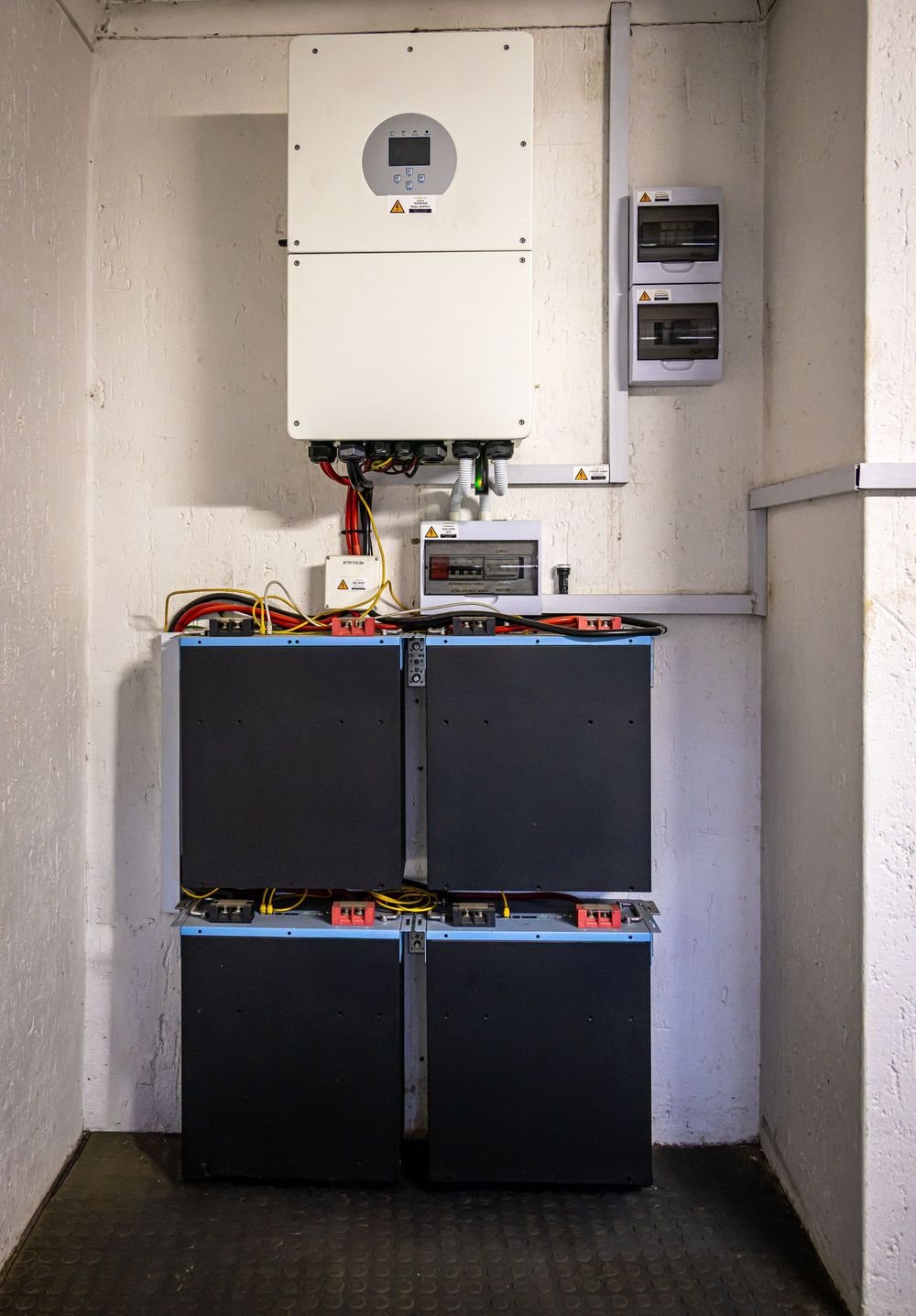
Which kind of inverter do you have?
Most homes have one of two setups. A string inverter is a single box, usually on the wall near your electrical panel or in the garage, that converts power from all your panels at once. If it fails, the whole system stops — but it is also a single, replaceable unit. A microinverter system puts a small inverter under each panel instead. One failure costs you one panel's production, not the whole array, and your app will show the dead panel individually. Power optimizers (common with SolarEdge) sit in between: electronics at each panel, one central inverter doing the conversion.
Not sure which you have? If your app shows a map of individual panels, you have panel-level electronics. If there is a box on the wall with a display or status lights, that is your string or hybrid inverter — its label is also where the brand, model and serial number live, which is exactly what a warranty claim needs.
What the warnings usually mean
Grid fault or grid error
The inverter cannot see a stable grid connection. Causes range from a tripped breaker to utility-side voltage problems to the inverter's own relay failing. A technician can tell which in one visit.
Ground fault (GFCI / isolation error)
Current leaking to ground, often moisture or damaged wiring on the roof. The inverter will refuse to run until it is fixed — this one should not be reset and ignored.
Overheating shutdowns
Many inverters protect themselves by shutting down or reducing output when they get too hot. Blocked vents, a failed fan, direct afternoon sun on the unit or an inverter that is starting to fail can all look identical from the app.
No display, no lights
Sometimes just a dead display on a working unit; sometimes a completely failed inverter. The production meter and a quick electrical check separate the two.
What replacement involves
- Confirm the diagnosis. Replacement is the last step, not the first — the fault has to be proven to be the inverter and not a breaker, wiring or grid problem.
- Check the warranty. Many inverters carry 10–12 year manufacturer warranties, sometimes extended to 20 or 25. If yours is covered, the manufacturer supplies the replacement unit through an RMA claim — The installer handles claims like this as part of adoption and repair work.
- Like-for-like, or current equivalent. If the exact model is discontinued, a current compatible model goes in. Either way the swap itself is usually a same-day job once the unit is on hand.
- Recommission and reconnect. The new unit is configured, tested, and paired back to your monitoring so your app shows real production again. Permit and utility requirements vary by city; the installer handles what your city asks for.
Get help with your solar system
Prefer to talk? Call or text (626) 888-7237 (Mon–Sat, 6 AM–10 PM). Or send this form and the licensed local installer will get back to you.
Solar Rescue SoCal is an independent solar information and referral website. Service inquiries are referred to one licensed local installer, who performs all inspections, quoting and installation work.